
FAQ
Find answers to common questions about the Health Access Card®, including activation, secure access to longitudinal health records, FHIR® interoperability, Blue Button 2.0 connectivity, and member support. Learn how the Health Access Card® empowers members with secure, on-demand access to their health information.

Digital Health Access
What is digital health access?
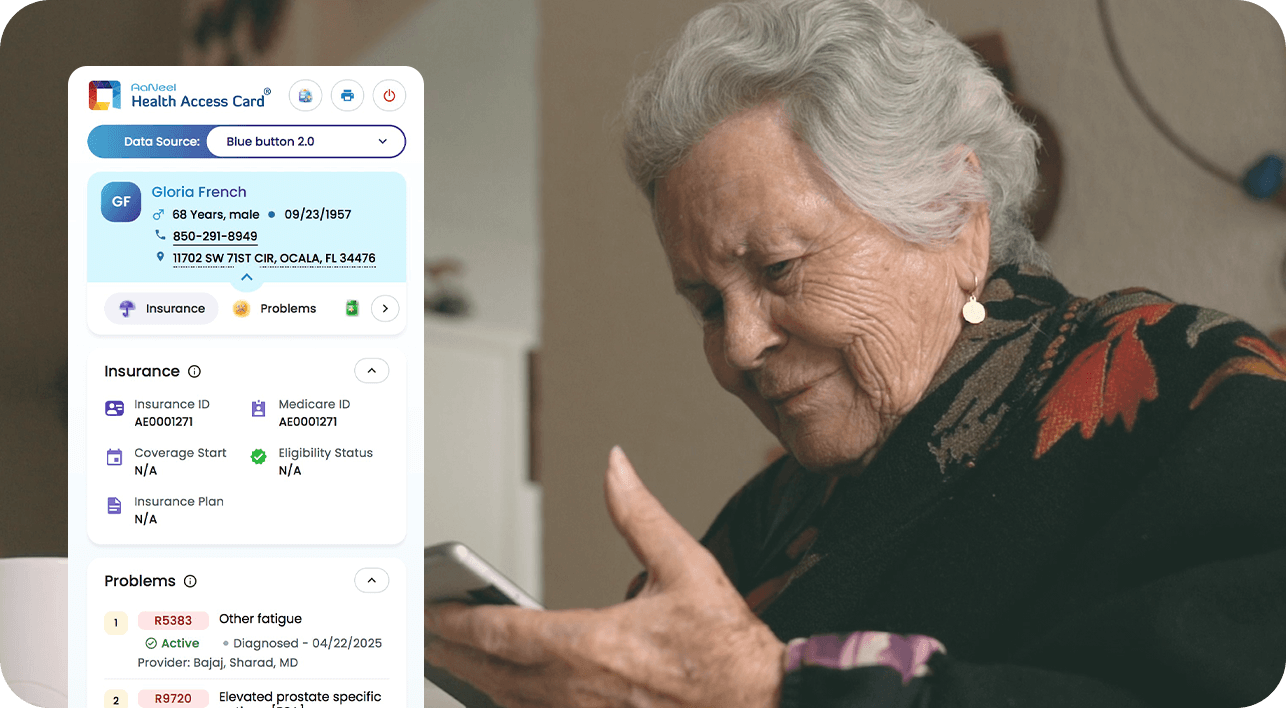
Digital health access refers to the ability for patients and providers to securely retrieve and use healthcare information across connected systems. It improves visibility in patient data and supports more coordinated care.
Why is accessing medical records often difficult?
Accessing medical records is often difficult because patient data is stored across multiple healthcare systems that do not always communicate. This fragmentation creates delays and limits visibility into a patient’s full health history.
How do patients and providers experience this challenge today?
Patients and providers often rely on manual requests, paperwork, or incomplete records when accessing health information. This can slow down care, create frustration, and lead to gaps in treatment decisions.
How can patients access their health records more easily?
Patients can access their health records more easily through digital tools that connect healthcare systems. These solutions allow authorized providers to retrieve patient information quickly and securely.
How do digital health access tools solve this problem?
Digital health access tools connect healthcare systems and enable secure access to patient data across organizations. This reduces delays, improves visibility, and supports more efficient care delivery.
What problem does the AaNeel Health Access Card® solve?
The AaNeel Health Access Card® solves the challenge of fragmented healthcare data by making it easier for providers to access relevant patient information across systems. This reduces delays, eliminates manual record requests, and improves visibility into a patient’s full health history.
How does the AaNeel Health Access Card® work?
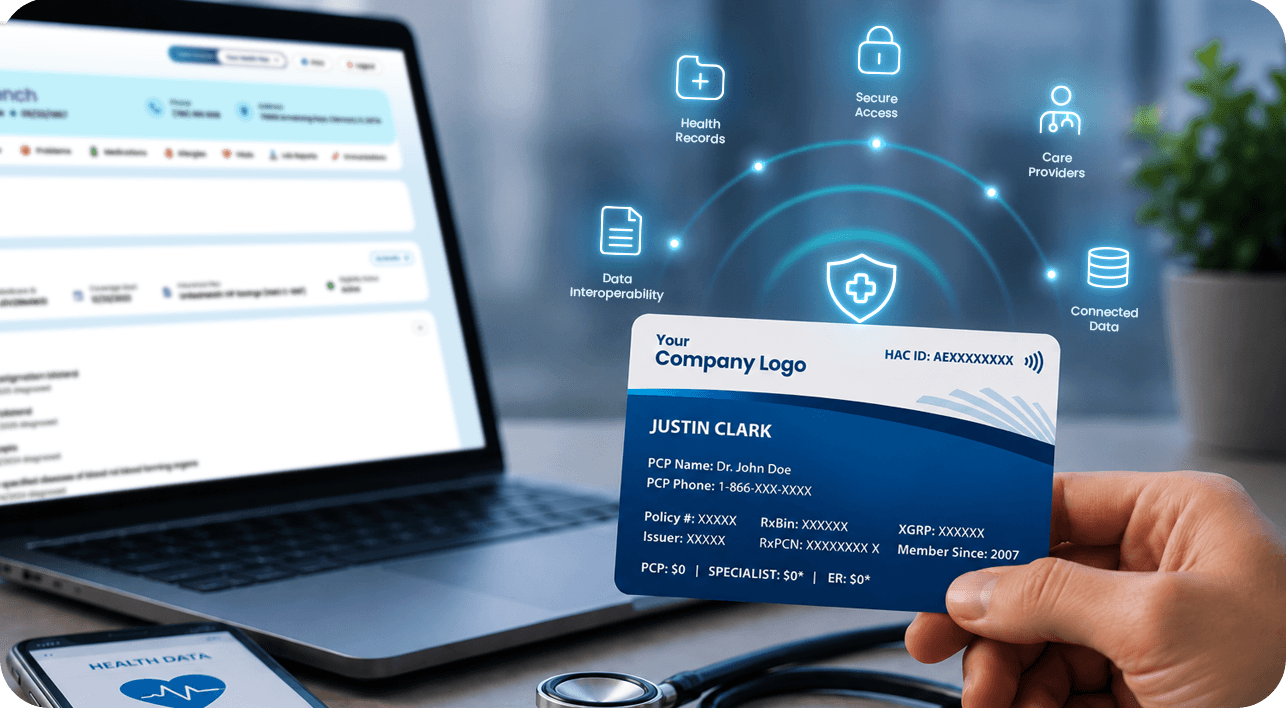
The Health Access Card® connects to interoperable systems and allows authorized providers to retrieve relevant patient data through secure digital infrastructure. Each access request is patient-authorized through a unique code sent to the patient’s phone, ensuring secure and controlled data sharing.
How does the Health Access Card® improve healthcare data access?
The Health Access Card® improves data access by enabling providers to retrieve patient information across systems without manual processes. This helps reduce delays and improve care coordination.
How does interoperability support digital health access?
Interoperability enables healthcare systems to exchange and use patient data across organizations. Digital access solutions rely on interoperability to ensure information is available when and where it is needed.
What makes the AaNeel Health Access Card® different?
The AaNeel Health Access Card® goes beyond basic data access by enabling real-time retrieval of patient information across systems without manual requests or delays. Each access request is patient-authorized through a unique code, ensuring secure and controlled data sharing.
Health Access Card® Technology
Outcomes & Performance

Why is digital health access important for care delivery?
Digital health access is important because it allows providers to retrieve accurate patient information when decisions are being made. This supports faster, more informed care.
How does digital health access improve patient outcomes?
Improved access to patient data helps reduce delays, close care gaps, and support more timely interventions. This leads to better patient outcomes and more consistent care.
How does digital health access improve provider workflows?
When providers can quickly access relevant data, they spend less time searching for information and more time delivering care. This improves efficiency and reduces administrative burden.
How does digital health access support value-based care?
Digital health access enables providers to track patient progress, identify care gaps, and coordinate interventions across systems. This supports better performance in value-based care models.
How does the AaNeel Health Access Card® support connected healthcare ecosystems?
The AaNeel Health Access Card® connects patients, providers, and healthcare organizations by enabling secure access to patient data across interoperable systems. This supports more coordinated and effective care delivery.